

TVING’s Transit Love 4 (or EXchange 4) has reached its midpoint as one of the most talked-about reality shows in Korea—breaking internal records, stirring intense discussion over the X Room, and reigniting the debate over “transit” versus “reunion” endings. Across multiple interviews, PD Kim In-ha has laid out how she built Season 4: from casting and format tweaks to emotional care for the cast and her hopes for the latter half.
Editor’s Note: This article is a consolidated translation and synthesis of multiple Korean interviews with the PD and reports about the TVING Original Series ‘Transit Love 4’ . All PD Kim In-ha’s quoted interview answers are presented as direct English translations of her original Korean remarks, while the surrounding explanatory and descriptive passages have been paraphrased for clarity and flow. Original Korean sources are listed in full at the end of this article.
Record numbers and the possibility of an extension
Inside TVING, Transit Love 4 is already being treated as a historic season. Kim In-ha explains that the performance has surpassed every previous cycle.
“We can’t disclose the numbers externally, but internally we’re recording very high figures, so we’re extremely satisfied.”
Asked how this compares with earlier seasons, she adds:
“You can say we’ve surpassed our target figures. Each season we have certain numbers we hope for, and we’ve exceeded those. In terms of pace, we’re moving about twice as fast as the other seasons.”
She’s referring not only to viewing performance but also to how quickly buzz builds each week—open chatrooms and online communities erupt as soon as new episodes drop, and the show has been leading TVING’s paid-subscriber contribution charts week after week.
Naturally, that success sparked reports that Season 4 might be extended from the usual 20 episodes to 22. On that, Kim has stayed cautious:
“It’s true that talks about an extension have come in, but we have to edit first and then decide. We’re still in the middle of editing, and the latter-half editing isn’t done yet, so it’s still a bit early to definitively say whether we’ll extend or not.”
Release rhythm: one episode, two episodes, and adjusting to the story
Although Transit Love 4 is now officially released every Wednesday at 6 p.m. on TVING, Kim In-ha explains that the team has been flexible about how many episodes drop at a time, depending on the emotional weight of each segment. Internally, they tweak the “release rhythm” so that core storylines land with maximum impact, which has led to weeks that feel denser or lighter in terms of content.
Because of this, some viewers have felt frustrated that the show is currently coming out as a single weekly episode. Kim acknowledges that feeling, but also hints that the pattern might not be permanent, saying,
“The direction of each week changes depending on the emotions in each episode,” and cautiously added, “We still need a lot more discussion, but it’s possible that the one-episode-per-week schedule could be broken.”
In other words, both the total number of episodes (20 vs a possible 22) and the per-week release format (one or two episodes at a time) are being treated as tools the production can adjust to better serve the season’s emotional arc.
Evolving the format: speed, structure, X Room and Talking Room

Unlike a radical reboot, Season 4 was designed as a careful evolution of the existing Transit Love DNA—same core premise, but with faster pacing and new elements that feel fresh without alienating fans.
“For Season 4, I wanted it to be the same as before, but with slightly different variations,” Kim explains. “If we change things too drastically, people who love Transit Love itself might feel repelled. So I tried to introduce small changes here and there — for example, turning the existing Talking Room into a group format where the exes can also listen, or structuring the X Room so that only one of the two goes in.”
From Season 3 onward, she preferred a brisker rhythm than the earlier installments:
“I myself was a big fan of the original Transit Love, so it was very clear to me that I must not damage the identity that Seasons 1 and 2 had. I wanted to carry over that emotional line, but personally I prefer a slightly faster tempo, so I changed things in terms of pacing. In Season 3, I tried to keep it similar to Season 2. Then after I had fully adjusted, Season 4 was where I raised the speed for fun—like revealing two Xs in a single episode,” she adds. “The remaining episodes will also unfold quickly, with a strong sense of pace.”
This desire for speed shows in how early the ex-reveal happens compared to past years and in the way the season hits turning points more aggressively.
At the same time, some viewers felt the middle stretch slowed down especially during the dense, emotionally heavy X Room arc.
“We made the early development faster than in other seasons, and in the middle part we had to show all of each couple’s stories through the X Room, so I think that may have made things feel a little slower,” she acknowledges. “But going forward, we plan to show a faster pace again.”
In planning this X Room, the team tried a structural experiment:
“During production, we thought, ‘What if the exes talk to each other first and then go into the X Room?’ We believed that would be the point where their relationship would really shift.”
But Kim readily admits the X Room is naturally divisive:
“The X Room was actually our biggest source of concern. When I directed Season 3, we couldn’t remove it, and for the cast it’s an extremely important element. But from the viewers’ perspective, depending on which couple they’re rooting for, it may well have felt boring.”
She freely admits this tension between emotional impact and viewer fatigue:
“It’s the element that most strongly shakes up the emotional line,” she says. “But from the viewer’s perspective, I think there are parts that feel tedious.”
Asked whether the X Room will definitely return in a potential Season 5, Kim doesn’t give a simple yes:
“We will think about it again,” she replies. “But there really isn’t any other element like it when it comes to stirring the participants’ emotions.”
For now, the X Room remains both the most powerful and the most controversial element in the series—important enough that even its possible removal has become part of the conversation.
Even the decision to send only one person into the X Room this time was the result of internal debate:
“We agonized a lot over whether one person should go into the X Room or both. If both go in, emotions come across very clearly, but this season we ultimately decided to have only one person enter. Of course there’s some regret, but in another sense I think there are cases where it worked out well.”
Kim also responded to criticism of the X Room’s visual design, revealing that there is a dedicated art director in charge of staging that space and finding ways to make each couple’s past feel tangible on screen.
“We have a separate art director who stages the X Room, and they did a lot of research into how to maximize the narrative,” she says. “The ‘petition-letter KakaoTalk’ prop in Jung Wonkyu and Park Jihyeon’s X Room was also their idea. I think they wanted to show just how long their KakaoTalk conversation was at the time, and to express the long breakup process. The director felt proud and was pleased with it.”
According to Kim, the intention behind these choices is not just aesthetic, but to compress a long and complicated emotional history into a single visual punch that hits the cast the moment they walk into the room.
Beyond the X Room, Season 4 features more direct, face-to-face scenes between exes and a house dynamic that sometimes feels as emotionally charged as the show’s famous overseas trips.
“There are so many scenes where the exes meet that the kind of vibe you’d usually feel only when the cast goes on a trip to their past destination now feels like it’s happening right in the Seoul house,” she notes. “There are many bold, straightforward personalities this time, so I think a lot of incidents branch out from that.”
And of course, there’s the “catfish” system—new entrants who shake up the relationships.
“I think viewers will be able to feel a completely new kind of fun,” Kim says of the upcoming catfish. “Their story will form a very important axis in the overall narrative. Since we cast people based on their stories, you can have high expectations.”
Travel episodes and the “real” start of Transit Love
For many fans, Transit Love truly comes alive once the cast leave the house and board a plane. Kim agrees:
“As people say, ‘Transit Love only truly begins after they get on the plane,’ I hope viewers will once again look forward to the latter half of this season.”
She confirms that key revelations will again unfold on the trip:
“This time as well, the ex reveals will take place during the trip,” she says, “but unlike last season, this time it won’t be revealed outdoors.”
The choice of destination itself is treated as an emotional trigger:
“The sense of excitement that a travel destination gives you can vary greatly in intensity. When they travel, their hearts can change and they become more honest, which is why the choice of destination is important. We thought emotions could change depending on where they go. We chose the destinations with the idea that getting on the plane and going to a particular place would influence their feelings, so I hope you’ll check that through the broadcast.”
Casting: 6 months of vetting, 1,000+ interviews, and matching ideal types
If the format is the skeleton, the cast are the heart of Transit Love 4. Kim says this season put unprecedented weight on who the participants are and how their stories differ.
“Unlike in previous seasons, this time I looked at the characters more than anything else. We cast with the idea that each couple’s narrative needed to be different at the center.”
That required a long, labor-intensive casting process:
“We sent countless DMs on social media and made countless phone calls. Among them, we met and interviewed about 1,000 people in person,” she explains elsewhere. “We also kept contacting people who had tried out for the previous season. In the meantime, they might have entered a new relationship or broken up, so we continued to reach out.”
Across the various interviews, she describes a minimum six-month period just for vetting:
“The thing we value most is authenticity, so when we look at potential cast members, we’re strict about their character,” Kim says. “Because of that, we end up meeting a huge number of people. We’ve sent about a thousand DMs for casting alone, and even after narrowing that down, we keep verifying them up to the very last moment before the broadcast goes out.” and “We try hard to get a feel for a person’s character by, for example, eating meals and having drinks together. Since it’s a co-living environment and we don’t know how their emotions will be expressed, many staff members take turns interacting with them.”
She adds that they deliberately don’t reveal who applied first or how each couple was approached:
“We’ve been doing this process for over six months. We also don’t reveal who was contacted first, because every couple has different reasons for applying. There are also cases where two people applied separately and it just so happened they were exes. There are many aspects that make it complicated to talk about.”
Alongside this, Season 4 sharpened its focus on aligning cast with each person’s ideal type:
“Even in the preliminary interviews, we always ask a lot about ideal types: what kind of values they have, what kind of person they want to meet. This time as well, we put great care into making sure things could align with each person’s ideal type. For this season, we put a lot of care into considering what type of person each participant wanted to meet—who their ideal type is—when we cast them,” she says in another interview. “I think that effort worked to some extent. It doesn’t come together immediately, but I believe we selected people so that real matching could actually happen.”
Personality first: what Kim looks for in a cast member

Across every outlet, Kim gives the same answer when asked what determines casting: character.
“Because they’re living together, I think people who have personality issues simply can’t co-live,” she says. “It’s a high-stress, very unusual situation, and it’s not easy to endure that time. That’s why character is the most important thing.” and “The situations that occur within Transit Love are very unusual—something even I have never personally experienced,” she adds. “When I interview each person at length, every one of them is a good person on an individual level.”
Her “method” for spotting good character is surprisingly simple:
“In the end, we have no choice but to meet them a lot. We call them often, and when needed, we have meals with them. Through frequent meetings, we help them feel comfortable and then observe how they are.”
Authenticity, fame, and whether they really broke up
As Transit Love got more popular, suspicion grew that some people join primarily to boost a career, especially when someone from entertainment appears, or that certain couples might not even be fully broken up.
Kim addresses both concerns directly.
On career-driven motives:
“When casting, we focus on the story they bring, so we don’t really factor that in,” she says about participants who work as actors, idols, or professionals aiming for fame. “What matters is whether they have a story worth telling. We prioritize their narrative over their job.”
She specifically cites the Season 3 couple Dongjin and Dahye to illustrate how narrative, not occupation, drove casting:
“In the case of Dongjin and Dahye, they had a 13-year story behind them, which is why they could appear,” Kim notes. “For the current cast as well, I believe we’ve chosen them because each has their own distinct narrative. I hope people will keep in mind that there’s a natural diversity of professions. Acting or working in entertainment is just one type of occupation, so if we have one professional in a different field, we might also have one actor or entertainment industry worker.”
On whether couples are truly exes, she insists that faking a breakup simply doesn’t survive the vetting:
“In the process of interviewing so many people, there have actually been cases where couples who hadn’t broken up yet came in for interviews,” she reveals. “Since we interview each partner separately, at a certain point it starts to show. We spend so much time verifying cast members that there’s no way we wouldn’t notice.”
As for the show’s “authenticity” overall, she defends both Season 3 and Season 4:
“I don’t think authenticity was lacking in the previous season either,” she says. “In the case of Dongjin and Dahye’s reunion last season, they had a 13-year narrative—even if the final broadcast didn’t show everything, we can’t declare their entire future history based on that. We didn’t particularly doubt their authenticity last time. This season as well, we’re still in contact with the cast even after filming, so in terms of authenticity, I think you can trust what you see.”
The core identity of Transit Love: empathy and emotional truth
For Kim, the essence of the series is not shock twists but shared feeling.
“I think the identity of Transit Love is ‘empathy,’” she says. “Our program contains love, but it also contains breakups. That sense of empathy and authenticity is the most important thing. Because it’s reality, the dopamine comes naturally,” she adds. “What we focus on is creating an environment where those sincere feelings can come out, so that both the cast and the viewers can really project themselves into it.”
That’s why the only “request” she makes of the participants is honesty:
“Because it’s a reality show, I’ve told the cast many times that they have to be honest,” she explains. “And to be honest, the level of closeness with the production team is important, so we conduct a huge number of interviews.”
And once exes face each other under one roof, even the producers can’t predict where things will go:
“Up until they actually see their ex under the same roof, many people insist, ‘My feelings will never change.’ But the moment they see their ex living in the house, the ‘control’ they were using to defend themselves collapses. In real situations, you can’t predict how you’ll act based solely on how the other person appears, so in those moments we don’t impose particular restrictions.”
“Transit” vs “reunion”: aiming for 50:50, living with the “Reunion Love” label
One of the biggest talking points since Season 3 has been the balance between couples who “transit” to a new partner and those who reunite with their ex. With four reunion couples last season, some viewers began jokingly calling the show Reunion Love.
Kim says the production always starts from the same target:
“From the production team’s point of view, we always aim for a half-and-half balance between ‘transit’ and ‘reunion’ when we select cast members,” she explains. “Last season as well, if you look at the ratios, it was about half and half. We value keeping that 50:50 balance because that way you can unfold the stories of those who want to reunite while also allowing people to meet someone new. We also tried to keep the half-and-half balance this season,” she says. “But the changes of heart that happen inside the house are something we simply cannot control. Once they actually see their ex in person, it’s the charm of reality that their hearts change and we can’t predict that. In the pre-interviews we did do our best to maintain that 50:50 balance.”
She emphasizes that, at least going into the house, the cast are usually emphatic about not reuniting:
“When we interviewed them, they were more determined than anyone not to get back together,” she says. “Because we repeatedly interview them and listen to everything they say, at least in the early emotional stage we try to keep that 50:50 balance. But the changes of heart that happen inside the house are something we can’t control. The cast will say, ‘I will never get back together,’ but once they actually see each other again, their hearts change. That’s the charm of reality.”
And while viewers may want more “transit couples,” the production team’s hearts lean in both directions:
“The truth is, our hearts go out to all the cast members, so we also cheer for reunions,” she admits. “We don’t think, ‘They must absolutely not get back together.’ But we also know many viewers are rooting for transit, so we think a lot about how to help those stories emerge as well.”
Hyeonji and Baekhyun: “a love of the century” and the X Room tears

Few scenes triggered as much debate as Hyeonji breaking down in the X Room while reading Baekhyun’s letter, especially because the time they’d spent apart was longer than their official relationship period. Some viewers said they couldn’t follow the emotional logic and even speculated she was copying Season 2’s Sung Ha-eun.
Kim strongly rejects that idea.
“Personally, I think Hyeonji and her ex Baekhyun had a ‘love of the century’—a love capable of transcending time,” she says. “Everyone has experienced a different kind of love. If you look only at the duration or physical timeline, it may be hard to understand, but emotionally I think that room was the saddest of all. In reality, Hyeonji cried even more, and it really hurt our hearts.”
In another interview, Kim added that their relationship stretched over roughly five years and described it as “a love that could cross five years of time.” She also revealed that Hyeonji had kept Baekhyun’s letters without rereading them in daily life and only handed them over to the production team for the purpose of preparing the X Room.
“Hyeonji had kept the letters without rereading them,” Kim explains. “It’s true she gave them to us to prepare the X Room, but when she stepped into that space and saw them opened up, I think it felt completely different. There were so many letters that she didn’t sit down and reread every single one before she submitted them.”
That context, Kim suggests, made the X Room encounter feel less like a staged moment and more like being ambushed by a past she had carefully kept folded away.
And on the “benchmarking” accusations:
“Those were tears that simply couldn’t be fake. In reality she cried even more,” Kim insists. “We were honestly worried about her, so the thought of it being some sort of benchmarking never crossed our minds even once.”
Wonkyu, the wedding dress controversy, and emotional care
Another lightning rod this season has been Wonkyu, particularly the “female friend wedding dress tour” storyline, which drew heavy criticism toward both him and his friend.
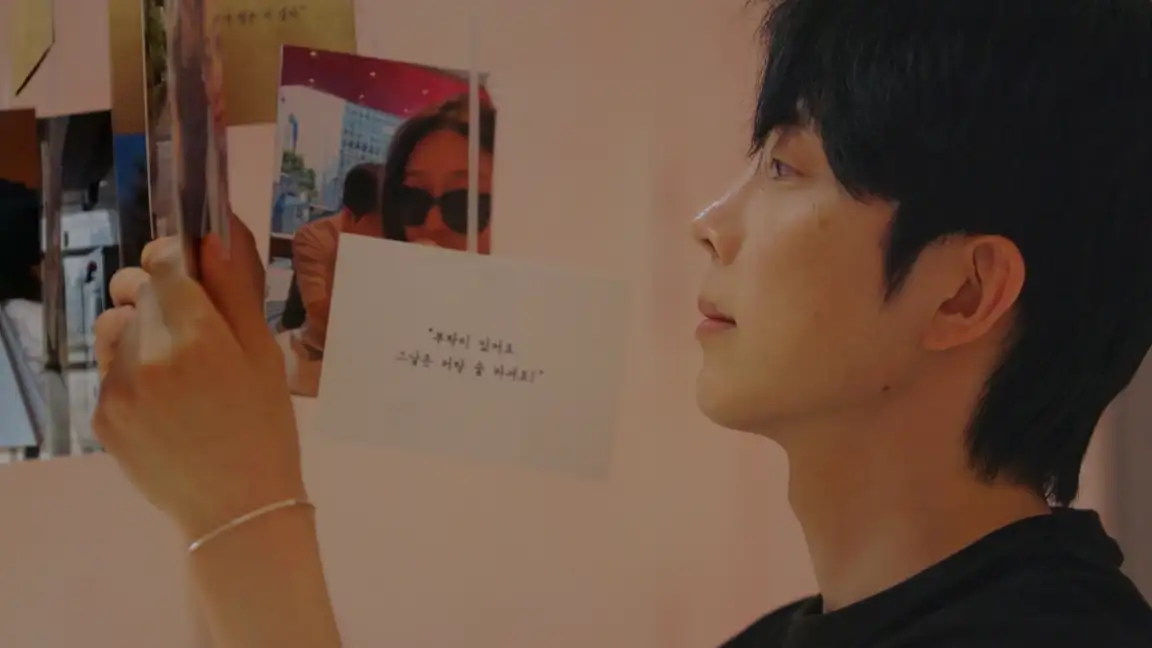
Kim’s tone is openly regretful:
“Wonkyu is a good person, so it’s really heartbreaking to see him getting so much hate,” she says. “His female friend is also being affected, so we’re doing our best to provide emotional care in many ways. The writer or PD in charge is watching over them closely, supporting them and speaking on their behalf when needed.”
Having watched him up close, she adds:
Having watched Wonkyu from up close, Kim PD described him as “a much more well-adjusted, healthy person than people think,” and expressed a wish that viewers would look at him with a warmer perspective.
At the same time, she notes that this season’s cast are particularly strict rule-followers:
“This season’s cast are especially people who place the highest importance on following the rules,” she explains. “Once they see something as a ‘rule’ like cleaning or keeping the X-related secrets—they try to follow every rule very strictly, which is why different kinds of happenings unfold.”
She has also said she was surprised viewers didn’t guess Wonkyu and Jihyun’s relationship in advance, given how their narrative is constructed.
Fairness and accusations of “pushing” particular cast members

With any reality show, fans often suspect the production of favoring certain characters. Kim says that’s the criticism that pains her the most.
“That’s the most heartbreaking thing to hear,” she says. “As the production team, we want all cast members to be loved, so we don’t have special affection only for certain people. I really wish such controversy wouldn’t exist.”
In other interviews she’s expressed the same idea:
“We want every cast member to be loved, and as the ones editing and presenting all of them, we can’t have special affection for just one person. I really wish there wouldn’t be that kind of controversy.”
The panel vs. online reviewers: why reactions feel “mild”

Another recurring viewer complaint is that the official panel: Simon Dominic, Lee Yong-jin, Yura, and Kim Ye-won—react too gently compared to sharp-tongued YouTube reviewers.
Kim, however, is firmly on the panel’s side.
“I think the current panel should be permanent,” she says, showing deep affection. “The cast are ordinary people, and by format the exes also appear together, so it’s a situation where things are extremely sensitive and they can be easily hurt. In that sense, I think it’s only natural that the panel protects the cast.”
She believes the comparison to review content is inevitable:
“I believe this criticism comes from the rise of review-style content recently,” she explains. “Those creators are in a position where they can freely express their own tastes and opinions, so comparison with an official panel is inevitable.”
On Simon Dominic, in particular, viewers have felt his reactions have calmed down:
“On set, he really becomes completely immersed and just stares at the screen intensely, watching very seriously,” Kim says. “He’s in such a deeply immersed state that it feels more like he’s being sucked into the story, which I think is why viewers perceive him that way.”
She hopes the panel will remain a constant while guests change:
“I’d like the panel to be forever, while our guests keep changing, so I hope people can also enjoy that aspect,” she says, adding that when they cast guests, what matters is whether those guests truly watch and understand the program.
And she teases that an all-time great “panel moment” is still ahead:
“The signature line of Season 4 hasn’t even appeared yet. There’s a big one waiting in the latter half,” she says. Confidently, she adds, “The iconic line of Season 4 will definitely come out in the upcoming episodes,” and jokes, “I’m going to make Simonic Dominic cry again this time.”
Proactive women and a new dating system
Viewers have also noticed how assertive the female cast members are this season. Kim says that’s by design.
“This season we didn’t do random dates; instead, we had a system where the women choose their dates,” she explains. “That structure naturally led them to take a more proactive attitude. Once you choose someone for a date once, it becomes more natural to ask them out again afterward. I think that’s why we’ve seen more proactive female participants this season.”
Pressure, mistakes, and living with criticism
Taking over from Season 2’s PD Lee Jin-joo (Jinjoo was also the creator of the show) was not easy. Kim has been candid about the weight she felt.
“Even after filming ended, I kept dreaming about the filming site. It was that much of a burden,” she recalls. “Because the pressure was so intense, I was honestly scared, thinking, ‘I can’t afford to miss even a single thing.’ But now I think I’ve gained a bit of know-how.”
As the show’s popularity has grown, so has the volume of criticism and the sheer number of rumors.
“Personally, regardless of what the specific reaction is, the very fact that it’s generating so many issues comes to me as pressure that ‘I have to do better,’” she says. “These days, I just think I have to do even better. As the episodes go on, I’m staying alert not so much to the reactions themselves as to the fact that the show is constantly becoming an issue, and working hard with that in mind.”
Rumors are another thing she simply cannot control:
“There are so many rumors that we couldn’t possibly address them one by one,” she says. “I hope you’ll check the truth through the broadcast itself.”
Looking ahead: legendary lines, catfish twists, and an emotional endgame
With Transit Love 4 now past its midpoint, Kim is trying to balance expectations: promising surprises, but grounding them in the show’s core of empathy.

She hints that structurally important “catfish” cast members will play a key role:
“I think viewers will be able to feel a completely new kind of fun,” she says. “Their story will form a very important axis in the overall narrative. Since we cast people based on their stories, you can have high expectations.”
And she repeatedly asks viewers to hold on for the back half:
“As people say, ‘Transit Love only truly begins after they get on the plane,’ I hope viewers will once again look forward to the latter half of this season. This time as well, the ex reveals will take place during the trip,” she reminds us, “but unlike last season, this time it won’t be revealed outdoors.”
Above all, she wants the audience to keep watching with the same emotional investment with which the show is made:
“Our program contains love, but it also contains breakups. That sense of empathy and authenticity is the most important thing,” she says. “We focus on creating an environment where those sincere feelings can come out, so that both the cast and the viewers can really project themselves into it.”
Whether Season 4 ends in more reunions, more “transits,” or some mix of both, Kim’s hope is that by the time the final episode airs, viewers will have come to understand and maybe even love that every single person who stepped into the Transit Love house.